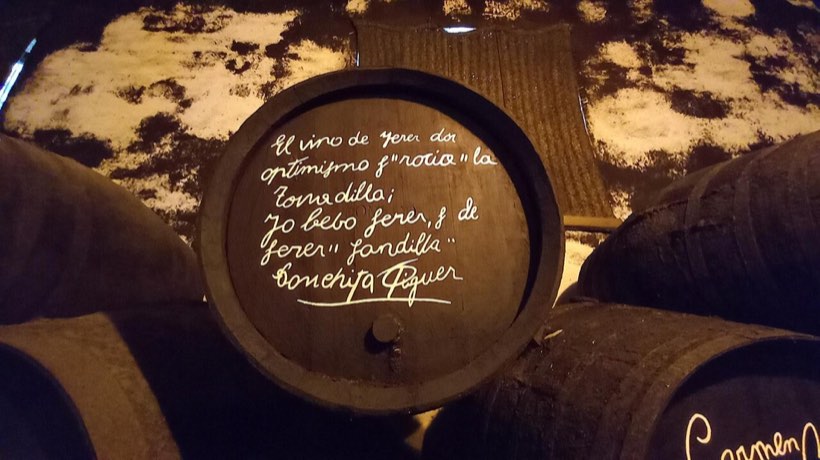
What is flower veil?
It is a layer of yeast that grows on the wine inside the butt and protects it from the air. Thanks to it, the Fino and Manzanilla remain pale, dry and light.
Why is chamomile only from Sanlúcar?
Because it is aged exclusively in wineries in Sanlúcar de Barrameda, next to the mouth of the Guadalquivir. If it is raised in Jerez, it is fine.
And Amontillado and Oloroso?
- Amontillado: it begins its aging under a veil of flor, like a Fino, and then continues in contact with the air. It is served between 12 and 14 °C.
- Oloroso: It is headed at 17% vol., never has a veil of flor and ages exposed to oxygen. It is also served between 12 and 14 °C.
Which one do I order at a tobacconist?
To start, a very cold Fino or Manzanilla. With a stew or cured cheese, an amontillado or an oloroso. The route of the tabancos has the most rated and what to order, and wineries compared tell which ones have tasting.
Frequently Asked Questions
Are Fino and Manzanilla the same thing?
They are very similar wines, white, dry and aged under a veil of flor. Chamomile can only be grown in Sanlúcar de Barrameda; the Fino, in the rest of the Marco de Jerez.
At what temperature is Fino served?
Between 6 and 8 °C, according to the Regulatory Council. Chamomile, the same.
What sherry wine is drunk with meat or cheese?
The Regulatory Council serves Amontillado and Oloroso between 12 and 14 °C; They are the ones that usually accompany more intense dishes.
Fonts
- Regulatory Council Fine
- Regulatory Council · Chamomile
- Regulatory Council · Amontillado
- Regulatory Council · Odorous
Times, prices and frequencies may change: always confirm on the official link before going.